Nearly half of all Google searches have local intent. People searching for a plumber, a dentist, a landscaper, or an HVAC company are not browsing. They are ready to call someone.
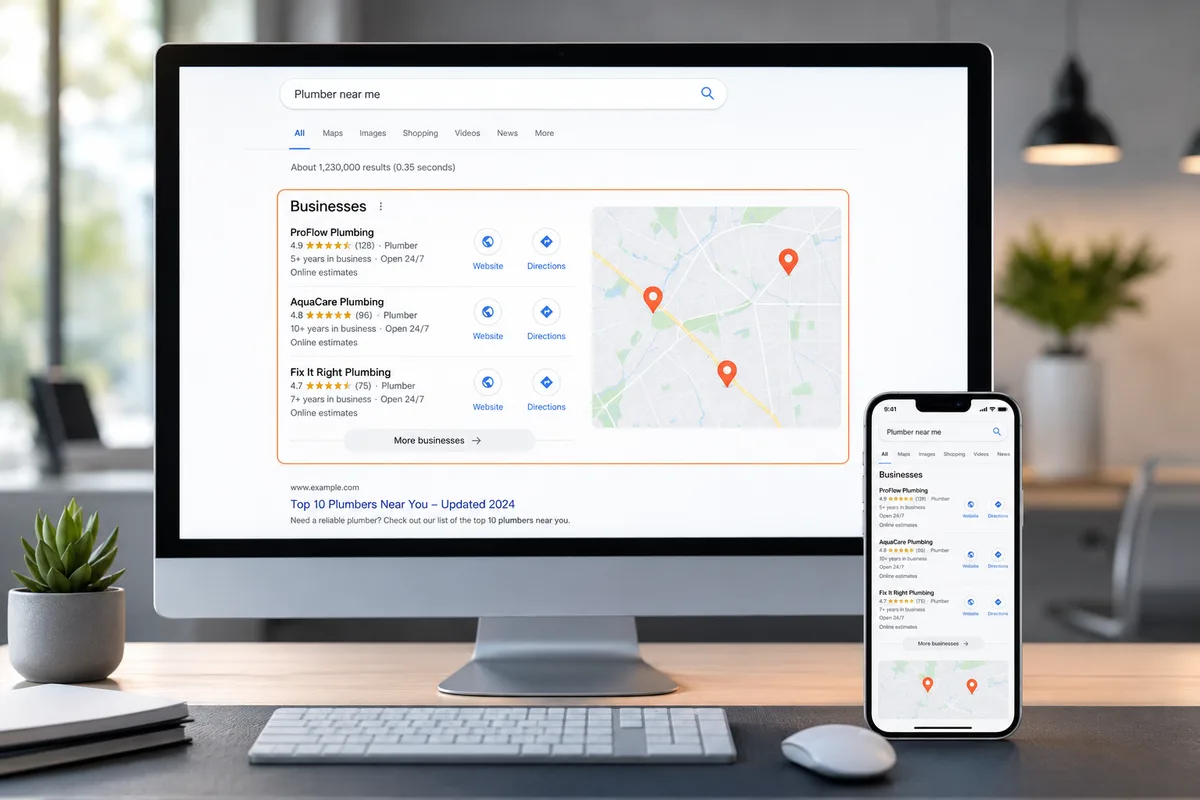
And when they search, the first thing they see is not your website. It is not your ads. It is a box of three local businesses sitting at the very top of the page, each with a star rating, a phone number, and a button to get directions.
If your business is not in that box, most of those customers will never reach you. They will call whoever is.
That box is called the Google Map Pack. Understanding how it works — and why your competitors are in it — is the first step to changing where your business shows up.
What Exactly Is the Google Map Pack?
The Google Map Pack is the block of three local business listings that appears at the top of Google's search results for location-based queries. It shows up when someone searches for a product or service near them — "electrician near me," "best Italian restaurant in [city]," "urgent care open now."
Each listing inside the Map Pack displays:
- Business name
- Star rating and review count
- Address and distance
- Hours and open/closed status
- Call and Directions buttons
The Map Pack pulls directly from Google Business Profiles — the free listings that any local business can claim through Google. It is also called the Local Pack or the 3-Pack, because Google shows exactly three results by default.
It appears above the standard organic search results. It appears above paid ads on many local queries. For searches with local intent, it is the first and often the only thing a person interacts with before making a decision.
This is not a minor feature. It is the dominant real estate in local search.
Why the Google Map Pack Matters for Local Businesses
For local businesses, visibility in Google's Map Pack can have a major impact on customer acquisition and revenue. When people search for nearby services, they are often looking for immediate solutions and are ready to take action.
The Map Pack appears prominently at the top of local search results, making it one of the most valuable positions for attracting high-intent customers. Businesses featured there typically receive more website visits, phone calls, direction requests, and customer inquiries than those that appear lower in search results.
Local search continues to be a primary way consumers discover businesses in their area. Whether someone is looking for a contractor, restaurant, dentist, or retail store, the businesses that appear in the Map Pack are often viewed as the most relevant and trustworthy options.
For many local companies, ranking well in the Map Pack can be the difference between consistently generating leads and losing potential customers to competitors. Even a well-designed website may struggle to produce results if it lacks strong local visibility, while businesses with a strong Map Pack presence are more likely to capture attention at the exact moment customers are ready to make a decision.
Simply put, the Google Map Pack is one of the most important digital assets a local business can have because it connects businesses directly with nearby customers who are actively searching for their services.
Signs Your Business Is Missing Out on Map Pack Visibility
Most business owners do not connect the Map Pack to their revenue decline right away. But the pattern is consistent. These are the clearest signals:
- Inbound calls have dropped without a clear explanation
- You rarely hear "I found you on Google" from new customers anymore
- A competitor you know well keeps appearing above you in local results
- You have a Google listing but have not updated or optimized it in months or years
- You invested in a new website but leads have not improved
If any of these feel familiar, the Map Pack is likely the gap. And the gap is fixable.
How Google Decides Which Businesses Appear in the Map Pack
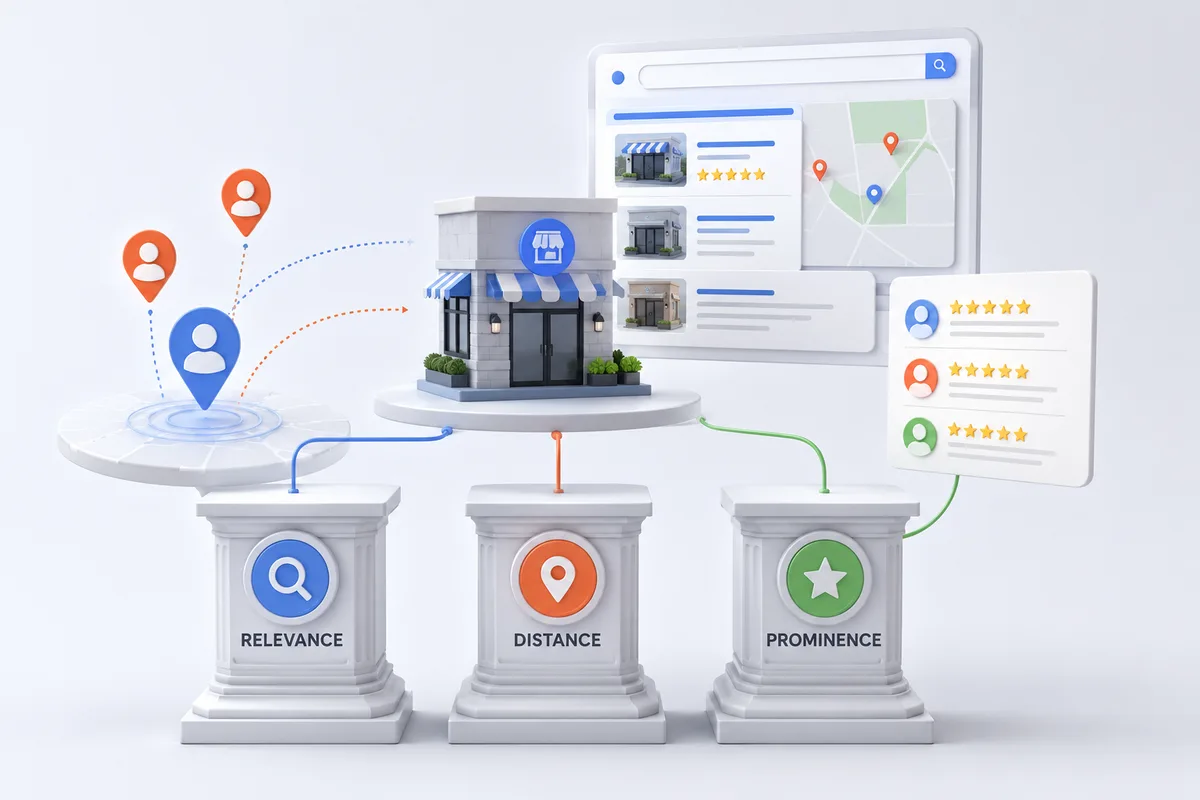
Google does not rank local businesses based on which one is actually the best. It has no way to evaluate that. What it does instead is make the most confident prediction it can about which business will best serve the person searching right now.
To make that prediction, it weighs three factors. Understanding these factors is what separates businesses that rank from businesses that wonder why they do not. For a deeper look at how these signals interact, see our breakdown of local SEO ranking factors.
Relevance
Relevance measures how closely your Google Business Profile matches the search someone typed.
If a customer searches "emergency HVAC repair" and your profile only says "Heating and Cooling," you are a weaker match than a competitor whose profile explicitly lists emergency services, 24-hour availability, and the specific services they offer.
Google can only work with what you give it. Vague categories and incomplete profiles mean missed matches — searches you should be winning but are not showing up for at all.
Distance
Distance measures how close your business is to the searcher, or to the location they mentioned in their query.
This factor is partly outside your control. If a competitor is physically closer to a customer at the moment they search, that proximity is a real advantage. But distance is only one piece of the equation. It does not override relevance or prominence. A well-optimized business further away will still outrank a poorly optimized business that is closer.
Prominence
Prominence is the factor that most businesses underestimate — and where most of the ranking opportunity actually lives.
Prominence measures how credible and well-known your business appears across the internet. Google looks at your reviews: how many you have, how recent they are, what your average rating is, and whether you respond to them. It looks at whether your business information is consistent across online directories. It looks at whether other websites mention or link to your business.
When two businesses are equally relevant and equally close to a searcher, prominence is what breaks the tie. It is also the factor you have the most direct control over.
How to Get Your Business Into the Google Map Pack
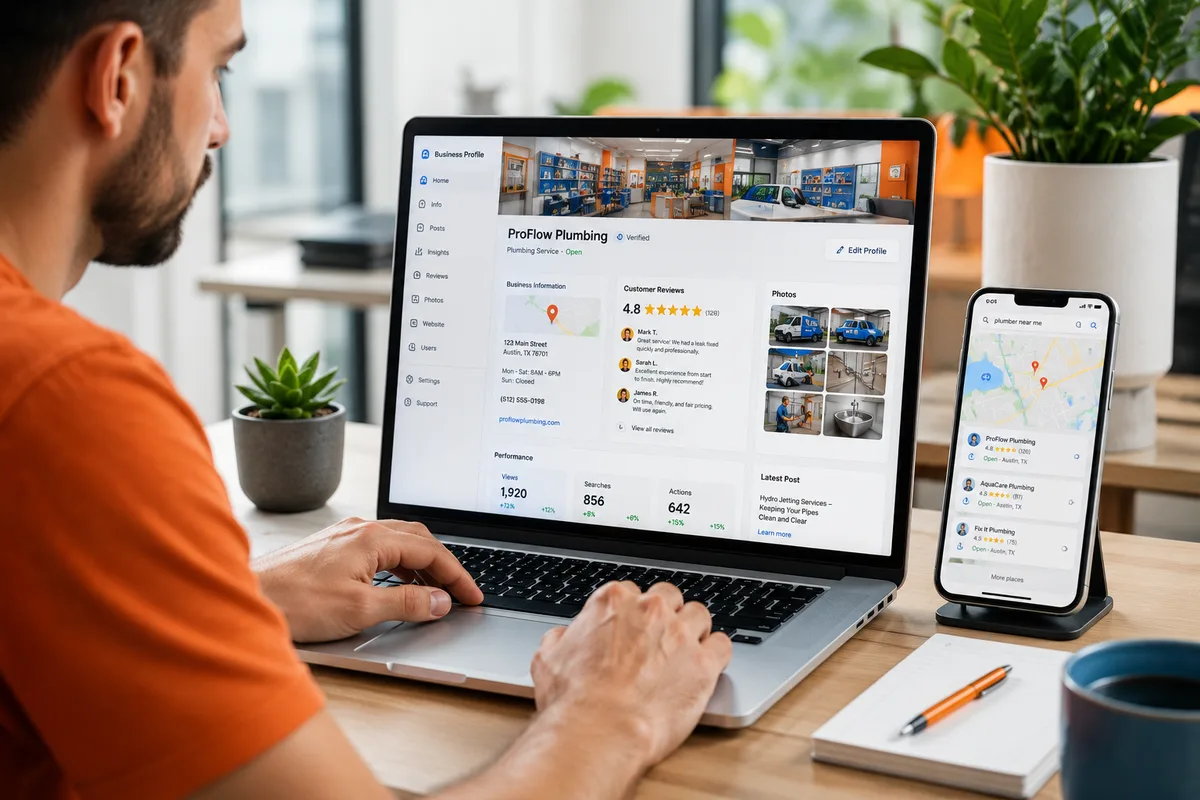
Getting into the Map Pack is not about tricks. It is about giving Google clear, consistent, trustworthy signals about your business — and doing it before your competitors do.
Quick Wins You Can Implement This Week
Claim and Complete Your Google Business Profile
If your profile is unclaimed or only partially filled out, that is the first thing to fix. Claim your Google Business Profile and treat every field as mandatory.
Fill in your business hours, service areas, business description, phone number, website, and the specific services or products you offer. Businesses with complete Google Business Profiles are 2.7 times more likely to be considered reputable by customers, and 70% of consumers are more likely to visit businesses with fully completed profiles.
Every blank field is a missed opportunity to match a relevant search.
Choose the Right Primary Category
Your primary category is one of the highest-leverage settings in your entire profile. Google uses it as a core relevance signal.
Be specific. "Roofing Contractor" outperforms "Contractor." "Family Dentist" outperforms "Dentist." Choose the category that describes your core service — the one that drives the most revenue — not the broadest category you technically qualify for.
If you have secondary services, add those as additional categories. But your primary category should reflect exactly what you want to be found for.
Add Real Photos
Profiles with photos get more engagement. That engagement is a signal Google notices.
Add photos of your physical location, your team, your work, and your products. They do not need to be professionally shot. Authentic, specific images that reflect your actual business perform better than stock photography.
Update photos regularly. A profile with recent images looks active. A profile with the same three photos from four years ago does not.
Ask for Reviews and Respond to Them
Businesses with 50 or more Google reviews earn more leads than those with fewer than 10. Reviews are both a prominence signal that affects your ranking and a trust signal that affects whether someone chooses to call you.
Build a consistent process around asking for reviews. After a completed job, a service call, or a purchase — make the ask. A direct link to your Google review page removes friction. Most customers who had a good experience will leave a review if asked at the right moment.
Then respond to every review. Positive reviews deserve acknowledgment. Negative reviews deserve a calm, professional response that shows future customers how you handle problems. A stronger average rating can help turn more visitors into paying customers.
Long-Term Strategies That Compound Results
Keep Your NAP Information Consistent
NAP — Name, Address, and Phone Number — needs to be identical across every place your business is listed online. Your website, Google Business Profile, Yelp, Facebook, industry directories, local chamber listings — every one of them.
Google cross-references your information across the internet. Inconsistencies — a slightly different address format here, an old phone number there — create conflicting signals. Conflicting signals lower Google's confidence in your listing, and lower confidence means lower rankings.
This is exactly why local SEO work that builds and maintains consistent citations across 25 to 50-plus directories has a measurable impact on Map Pack visibility. Citation consistency is not glamorous work, but it is foundational.
Build a Consistent Review Strategy
A burst of 30 reviews in one month followed by six months of silence is less effective than a steady flow of two or three reviews per month over the same period.
Google weighs recency. An active, ongoing review stream signals that your business is operating, earning customers, and delivering results worth talking about. Build the ask into your workflow so it happens reliably — not only when you remember to do it.
Publish Regular Google Business Profile Posts
Google lets businesses publish posts directly to their Business Profile — updates, offers, announcements, completed projects. Most businesses never use this feature.
Regular posts signal that your profile is actively managed. They give Google fresh content to index and give customers a reason to engage with your listing. A few posts per month is enough to make a meaningful difference over time.
Common Google Map Pack Mistakes to Avoid
Keyword Stuffing Your Business Name
Adding keywords to your business name on your Google profile — "Smith Plumbing | Emergency Drain Repair | Cheap Plumber Near Me" — violates Google's guidelines. Google reviews for this actively. Listings that are caught can be suspended entirely.
Your business name on Google should match your actual legal or trading name. Nothing more.
Using Fake Addresses
Creating a Google Business Profile at a location where your business does not actually operate — to appear closer to more customers — is a violation that Google detects and penalizes.
The consequences range from ranking suppression to full listing suspension. The short-term gain is not worth the risk of losing your listing entirely.
Ignoring Customer Reviews
Not responding to reviews is one of the most common mistakes local businesses make, and one of the most visible. A page full of unanswered reviews — especially negative ones — signals to both Google and potential customers that no one is paying attention.
A professional, thoughtful response to a negative review demonstrates accountability. It shows prospective customers what to expect if something goes wrong. Silence never works in your favor.
Why Most Businesses Struggle to Maintain Map Pack Rankings
Understanding what needs to be done is the easy part. Most business owners can follow this list. The harder part is executing it consistently — month after month — while running an actual business.
Claiming a profile takes an afternoon. Keeping it fully optimized over time — citations consistent across dozens of directories, a steady review cadence, updated photos, regular posts, profile changes reflected everywhere — that is a system. And systems only work when someone is responsible for running them.
The business owners who hold strong Map Pack rankings are not doing anything extraordinary. They either built a disciplined routine around local SEO maintenance, or they assigned that responsibility to someone whose job it is to maintain it. Either way, consistency is what separates them from competitors who optimized once and then moved on.
That gap compounds over time. The business that maintains its local presence every month pulls further ahead. The business that treats it as a one-time task slowly falls behind.
How Oootech Helps Businesses Rank in the Google Map Pack
Our local SEO services are built specifically for this problem.
We handle the work that business owners know matters but rarely have the capacity to do consistently: Google Business Profile optimization, citation building across 50-plus high-authority directories, NAP consistency audits, review and reputation management, and ongoing monitoring to catch anything that slips.
This is not a setup-and-forget service. Local SEO is an ongoing discipline. The businesses that rank and stay ranked treat it that way — and we operate as the team that makes that possible without it consuming your time.
The three spots in the Map Pack do not go to the most deserving business. They go to the business that shows up correctly, consistently, across every signal Google looks at. That is what we build for our clients.
Want to Know Where Your Business Currently Stands?
Before you make any decisions, it helps to see the actual picture — where you rank right now for the searches that drive customers in your market, who is currently occupying those top three spots, and what separates their profile from yours.
We put together a free local visibility check for businesses that want that clarity. No obligation, no pitch you did not ask for. Just an honest look at where you stand and what is driving the gap.
If the Map Pack is costing you customers, the sooner you know exactly why, the sooner you can do something about it.
Get my free local visibility check →
Frequently Asked Questions
What is the Google Map Pack?
The Google Map Pack is the block of three local business listings that appears at the top of Google search results for location-based queries. Each listing shows the business name, star rating, address, hours, and options to call or get directions. It pulls from Google Business Profiles and is also called the Local Pack or 3-Pack.
Why is the Map Pack so important for local businesses?
The Map Pack captures most of all clicks on local search results — more than organic listings and paid ads combined. Businesses in the top three positions receive more traffic and more customer actions than businesses ranked just below the pack. For local intent searches, it is the primary place where buying decisions get made.
How do I get my business into the Google Map Pack?
Start by claiming and fully completing your Google Business Profile. Choose a specific primary category that reflects your core service. Build a consistent process for requesting and responding to reviews. Keep your business name, address, and phone number identical across all online directories. Maintain this consistently over time — the businesses that rank are the ones that treat local SEO as an ongoing system, not a one-time task.
What are the main Google Map Pack ranking factors?
Google uses three core ranking factors: relevance (how well your profile matches what the person searched), distance (how close your business is to the searcher), and prominence (how credible and well-established your business appears across the internet based on reviews, citations, and mentions). Prominence is where most businesses have the greatest opportunity to improve their rankings.
How long does it take to rank in the Map Pack?
Many businesses see early movement within a few weeks of optimizing their Google Business Profile and addressing major gaps. More meaningful and sustained ranking changes typically develop over one to three months. The timeline depends on your market's competitiveness and how much foundational work was already in place.
Can a service-area business with no storefront rank in the Map Pack?
Yes. Service-area businesses — those that travel to customers rather than operating from a fixed location — can absolutely rank in the Map Pack. They should clearly define their service areas within their Google Business Profile and focus heavily on relevance signals and prominence, since they have less direct control over the distance factor compared to businesses with a physical storefront.
Is the Map Pack the same as ranking #1 on Google?
No. The Map Pack is a separate results feature that appears above the standard organic search results and pulls from Google Business Profiles. Ranking first in regular organic results is driven by your website's SEO. They are two distinct systems, though your website's authority and local content do influence your Map Pack prominence. For most local businesses, the Map Pack delivers more direct business impact than organic rankings.